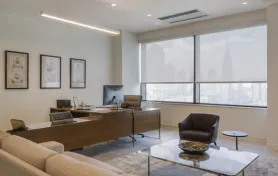
Commercial Window Treatment Contractor in Georgia: What GCs & Architects Should Know
A commercial window treatment contractor in Georgia should be evaluated the same way you’d evaluate any trade partner on a bid: licensing and insurance, manufacturing lead times, product durability under daily use, and whether they can actually show up for a school, office, or healthcare project without slowing down your schedule. Alliance Window Coverings has spent over 25 years in Georgia doing exactly that work, and this guide walks through what general contractors and architects should actually ask before signing a window treatment vendor onto a commercial job.
Why I’m Writing This: A Veteran-Owned Business Built on Commercial and Residential Work
My name is Alex Pakdaman, and I own Alliance Window Coverings. Before starting this company, I owned Bebe Blinds & Shutters, where I completed hundreds of residential and commercial installations across Georgia. That earlier business is where I learned the difference between hanging blinds in a homeowner’s living room and coordinating a full window treatment install across a three-story office building with an electrical contractor, a property manager, and a hard move-in date.
Alliance Window Coverings is a veteran-owned company, and we serve residential, commercial, education, and multi-family customers with blinds, shades, shutters, and motorized window treatment solutions. That range matters for this article, because “commercial window treatments” isn’t one job; it’s several different jobs depending on whether you’re outfitting a school, a hospital wing, a government building, or a 200-unit apartment community, and each one comes with its own constraints that a residential-only installer usually hasn’t dealt with.
In short, commercial window treatment work in Georgia requires a contractor who understands building schedules, product durability at scale, and coordination with other trades, not just someone who can measure and hang blinds.
What Does a Commercial Window Treatment Contractor Actually Do?
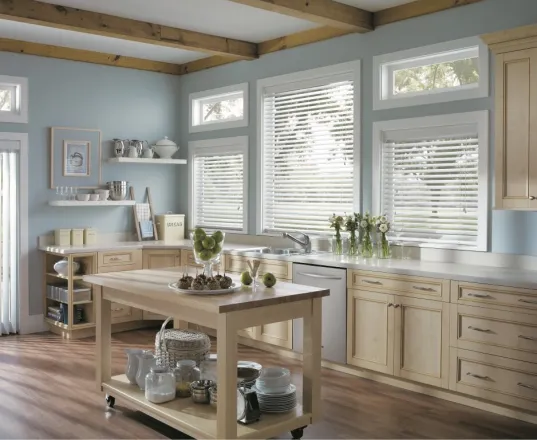
A commercial window treatment contractor manages the full scope of a project: product selection based on the building’s use, precise measuring across large quantities of windows, coordination with the general contractor’s timeline, and installation that doesn’t interfere with other trades still finishing the space.
On a residential job, I might be scheduling one homeowner for a Tuesday morning appointment. On a commercial job, I’m often working around an electrician who still needs to run low-voltage wiring for motorized shades, a painter who needs the window frames clear until Thursday, and a facilities manager who needs the building ready for occupancy by a specific date. That’s a different kind of coordination, and it’s the first thing GCs and architects should confirm a vendor can actually handle before including them in a bid package.
At Alliance Window Coverings, we’re fully licensed and insured for all our window covering services, which protects the property owner and the general contractor on the job, this is worth confirming with any vendor before they’re added to a commercial scope of work.
How Is Commercial Work Different From Residential Window Treatments?
The honest answer is that the products often overlap, roller shades, blinds, and shutters all show up in both residential homes and commercial buildings, but the specifications, quantities, and use conditions change significantly.
|
Consideration |
Residential Projects |
Commercial Projects |
|
Typical quantity |
A handful of windows per home |
Dozens to hundreds of windows per building |
|
Product priority |
Style and match to home decor |
Durability under daily, heavy use |
|
Control preference |
Manual or motorized by choice |
Motorized shades increasingly standard for large window counts |
|
Scheduling |
Single homeowner appointment |
Coordinated around other trades and building timelines |
|
Decision-maker |
Homeowner |
Facilities manager, architect, GC, or property owner |
|
Common settings |
Living rooms, bedrooms, home offices |
Schools, offices, hospitals, government buildings, multi-family communities |
That last row is where most of the difference actually lives. A shade in a homeowner’s bedroom gets raised and lowered a few times a week. A shade in a school hallway or an office conference room gets used constantly, by different people, often without much care, which is why commercial-grade materials and motorized options come up so often once a project moves past a handful of windows.
What Should General Contractors and Architects Look For in a Window Treatment Partner?
Does the contractor have real commercial project experience?
Ask directly whether the company has worked on schools, offices, healthcare facilities, or multi-family communities before, not just homes. At Alliance Window Coverings, we can help with window coverings for large buildings or multiple properties, and we have direct experience working with schools, offices, apartments, and similar commercial settings. No project is too big or too small for us to take on, which matters when a bid package includes both a small administrative office and a full campus renovation.
Can they source American-made, durable products?
We proudly support American manufacturing by sourcing high-quality, domestic products built to last, which matters for commercial buyers who need materials that hold up under years of daily use rather than products designed primarily for residential turnover.
Do they offer motorized and automated options for large window counts?
Motorized shades reduce the labor of manually adjusting dozens or hundreds of windows across a building, and they’re increasingly the default request on new commercial construction and renovation projects. You can learn more about our shades, which include options built for both residential comfort and commercial-grade performance.
Do they carry the right insurance and licensing for a jobsite?
This one is non-negotiable on any commercial bid. Confirm licensing and insurance before a vendor sets foot on a jobsite with other active trades.
A commercial window treatment vendor should be able to answer all four of these questions clearly and specifically; vague answers here usually predict problems mid-project.
What Types of Commercial Projects Need Window Treatments?
Schools and Universities
School buildings need window treatments that hold up to heavy daily use in classrooms, hallways, and gymnasiums, often across dozens of rooms installed on a compressed summer-break timeline. Durability and quick, reliable installation matter more here than in almost any other commercial setting, since schools typically can’t extend their installation window past the start of the academic year.
Healthcare Facilities
Hospitals and healthcare buildings need window treatments that support patient comfort and light control in exam rooms, waiting areas, and patient rooms, often with cleanable, low-maintenance materials. Coordination matters here too, since healthcare facilities are rarely able to shut down a full wing for installation the way a new-construction office building can.
Government Buildings
Government facilities often require vendors who can navigate procurement processes and provide documentation on licensing, insurance, and product specifications as part of a formal bid, not just a quote.
Offices
Office buildings are frequently where motorized shades get requested first, since large window walls in conference rooms and open floor plans benefit from centralized, automated light control rather than dozens of individually operated blinds.
Multi-Family and Senior Living Communities
Property managers overseeing multi-family or senior living communities need a vendor who can handle unit-by-unit installations on a rolling basis as units turn over, rather than a single one-time installation across the whole property.
Churches and Hotels
Churches and hotels often combine the design priorities of residential work, matching decor, and controlling glare in large windows with the scale of commercial projects, which is why experience across both categories matters for these buildings specifically.
How Does Alliance Window Coverings Handle a Commercial Project From Bid to Installation?
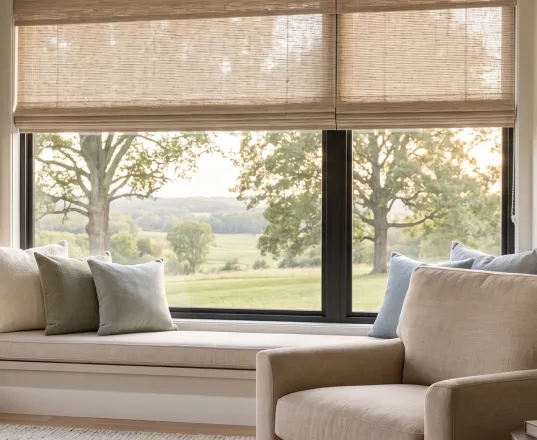
Every commercial project we take on starts with a free consultation, where we bring product samples to the site, review the space, and help the decision-maker, whether that’s a facilities manager, architect, or general contractor, choose products that fit the building’s use case, not just its appearance.
From there, our team measures every window with the same precision we use on residential jobs, just at a commercial scale, and we coordinate installation timing with whatever else is happening on the jobsite. If old window treatments need to be removed as part of the scope, we handle that too; just let us know in advance, and removal gets included in the quote.
We can also install blinds and shutters alongside shades on the same project when a building’s design calls for a mix of products across different rooms or wings, which is common on renovation projects where different sections of a building serve different purposes.
What Products Work Best for Commercial Spaces?
Roller shades are one of the most common choices for commercial buildings because they offer a clean, modern look while delivering strong light control and privacy, a fit for modern offices, professional buildings, and commercial spaces generally. For buildings with heavy sun exposure on exterior-facing walls, exterior-grade shade fabrics are also available and are built to handle demanding outdoor conditions on commercial facades and wide-format shade systems.
1” aluminum blinds are another frequent commercial pick, since they’re built for long-lasting quality and precise light control across homes, offices, schools, and commercial properties without a high-maintenance burden.
Shutters show up less often at a commercial scale but remain a strong choice for spaces where a building wants a residential-style, upscale look, professional offices with a more traditional design language, for example, or healthcare waiting areas designed to feel less clinical.
The right product for a commercial space depends less on personal style and more on how heavily that space gets used and who’s operating the window treatments day to day.
Frequently Asked Questions
-
Can you help with window coverings for large buildings or multiple properties?
Yes. We have direct experience working with schools, offices, apartments, and similar commercial settings, and no project is too big or too small for us to handle. -
Are you licensed and insured for commercial window covering work?
Yes, Alliance Window Coverings is fully licensed and insured for all our window covering services, which protects the building owner, the general contractor, and everyone else on the jobsite. -
Do you remove existing window treatments as part of a commercial installation?
Yes. If old window treatments need to come out first, let us know in advance, and we’ll include removal as part of the quote so there’s no separate scope to manage. -
How long does a commercial installation take?
Timing depends on the number of windows and the products chosen. Smaller commercial jobs are often finished in a few hours, while larger or more complex buildings take longer, we’ll walk through a realistic timeline during the free consultation based on your specific project. -
What types of window coverings do you offer for commercial buildings?
We offer blinds, shades, and shutters in a range of materials, styles, and control options, all selected to match the specific space, whether that’s a school, an office, or another commercial building.
Key Takeaways
-
Commercial window treatment projects differ from residential jobs mainly in scale, durability requirements, and coordination with other trades and building timelines.
-
Confirm licensing, insurance, and real commercial project experience before adding a window treatment vendor to a bid package.
-
Motorized shades are increasingly the default request for large window counts in offices and schools, since they reduce the labor of manual operation across dozens of windows.
-
Different commercial settings- schools, healthcare facilities, government buildings, and multi-family communities each come with their own scheduling and product priorities worth discussing upfront.
-
A short, specific consultation before a bid is submitted saves time later; you can see examples of past projects or reach out directly to start that conversation.
About the Author
Alex Pakdaman is the owner of Alliance Window Coverings, a veteran-owned company serving residential and commercial clients throughout Georgia. Before founding Alliance Window Coverings, he owned Bebe Blinds & Shutters, where he completed hundreds of residential and commercial installations across the state. He has over 25 years of experience helping homeowners, builders, and businesses select and install custom blinds, shades, and shutters. He can be reached through Alliance Window Coverings’ contact page.